
Managing organic matter is a massive challenge in turfgrass. But why have traditional biological dethatching solutions consistently failed? The answer lies in the molecular anatomy of the plant cell wall.
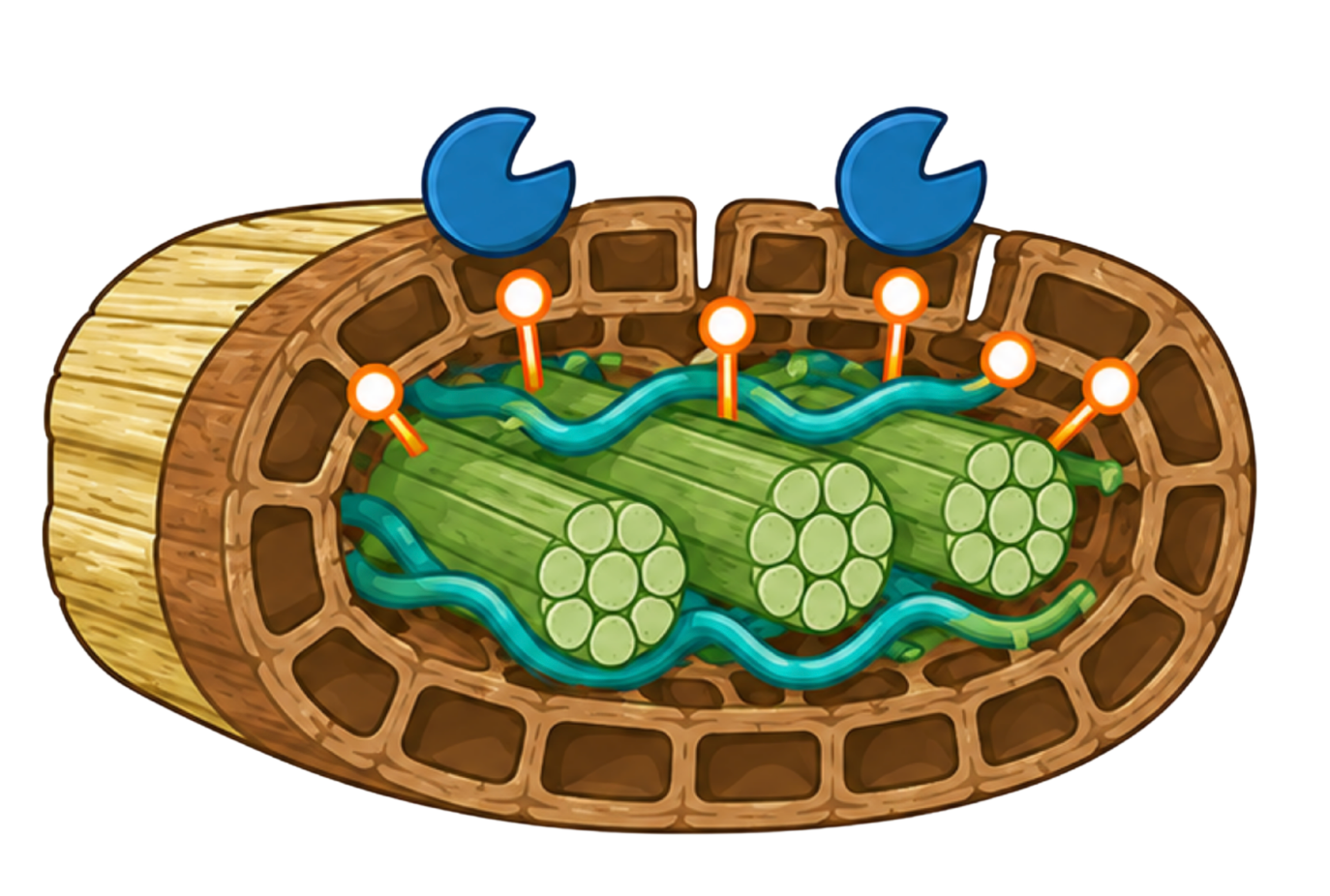
Think of thatch as industrial concrete. The easily degradable sugars act as the steel rebar, completely encased in a recalcitrant lignin matrix (the concrete). Past biologicals targeted the sugars, bouncing right off the tough lignin exterior.
To safely break down thatch, you have to overcome three massive biochemical hurdles:
- The Chaos of Lignin: Lignin monomers attach randomly, creating a highly heterogeneous structure locked together by different resistant bonds. Lignin monomers are also linked with structural sugar monomers with several kinds of bonds making the entire ligno-cellulosic structure heterogenous. Standard microbes cannot "unzip" it.
- The Peroxidase Problem: Some fungal enzymes (peroxidases) can break lignin, but they require hydrogen peroxide—a strong chemical oxidant that can cause severe phytotoxic scalping on turfgrass. We needed a safe alternative like laccase, which uses only ambient oxygen from the air.
- The Redox Requirement: Lignin is 80–90% non-phenolic. Standard, low-redox enzymes can only break the minor phenolic fractions. Shattering the entire matrix requires massive thermodynamic power.
In 2008, alongside Dr. Paul Raymer, Dr. Bob Carrow, and Dr. Jack Huang at the University of Georgia, our team pioneered the direct application of high-redox laccase enzymes to do exactly this.
Building on that foundational UGA science, I am thrilled to introduce
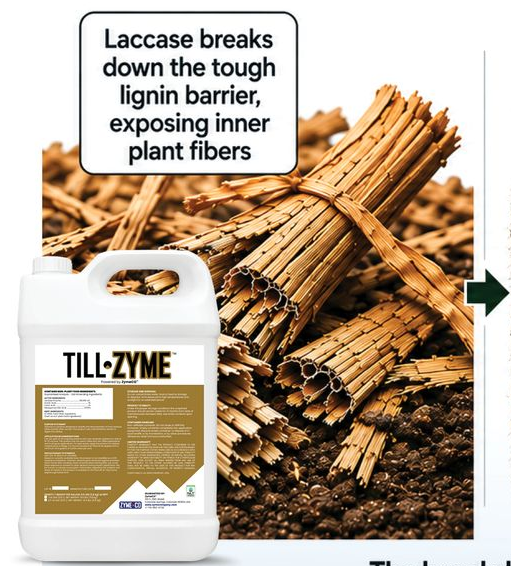
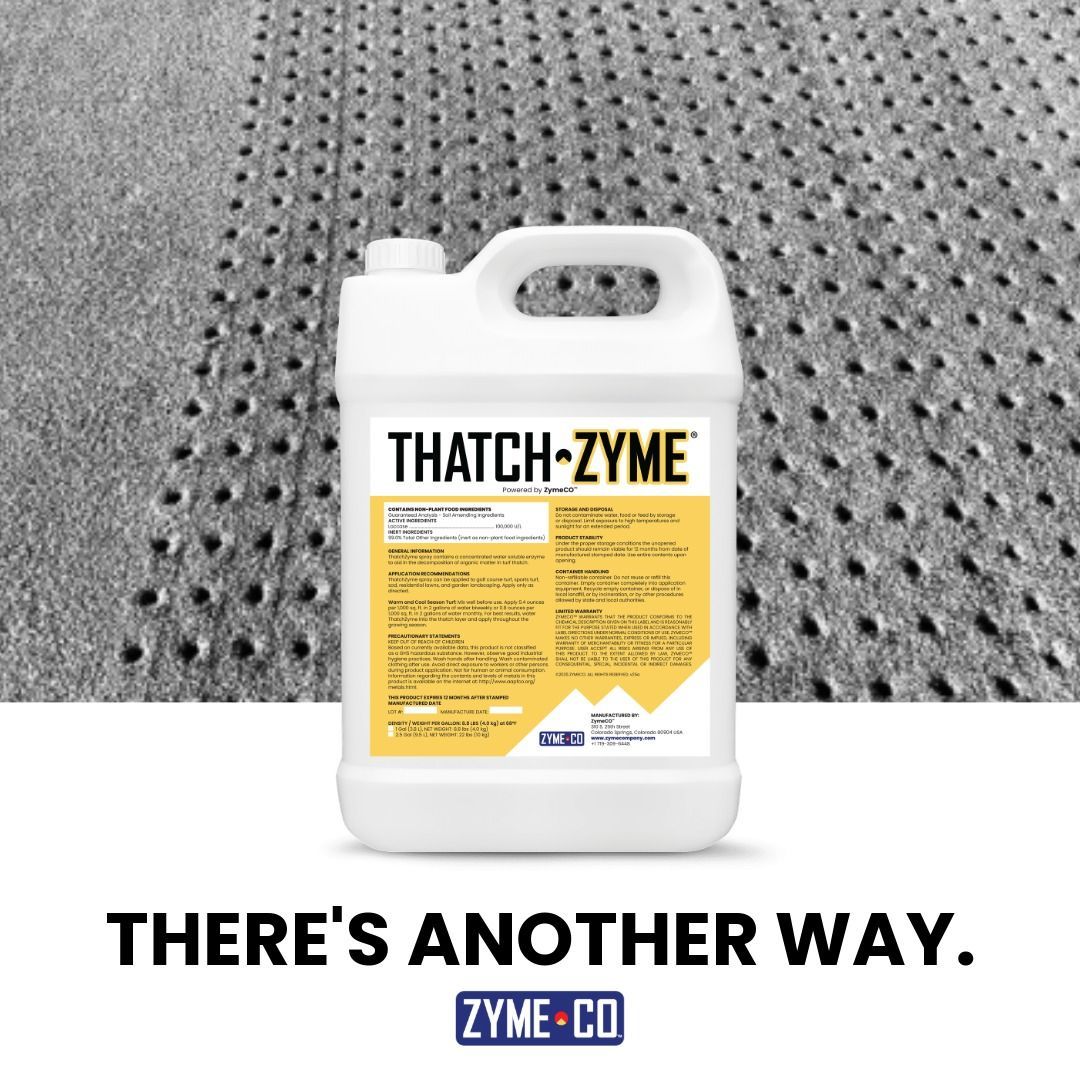
ThatchZyme from ZymeCo. 🧬
- Proprietary Power: Delivers an exceptionally high redox potential from a proprietary fungal source to break both phenolic and non-phenolic bonds.
- Zero Disruption: Shatters the lignin seal using only ambient molecular oxygen, requiring zero course closures.
It is time to replace disruptive mechanical aeration with a proven biochemical paradigm.
#TurfgrassManagement #Agronomy #GolfCourseMaintenance #ZymeCo #ThatchZyme #TurfScience #RedoxPotential