

How FulviZyme Helps Plants Eat Better
Jenny Phillips, Director of Marketing • September 30, 2025
Nutrients often get “stuck” in the soil. FulviZyme acts like a tiny “nutrient shuttle” that grabs those nutrients and helps deliver them to the plants where they can actually use them.
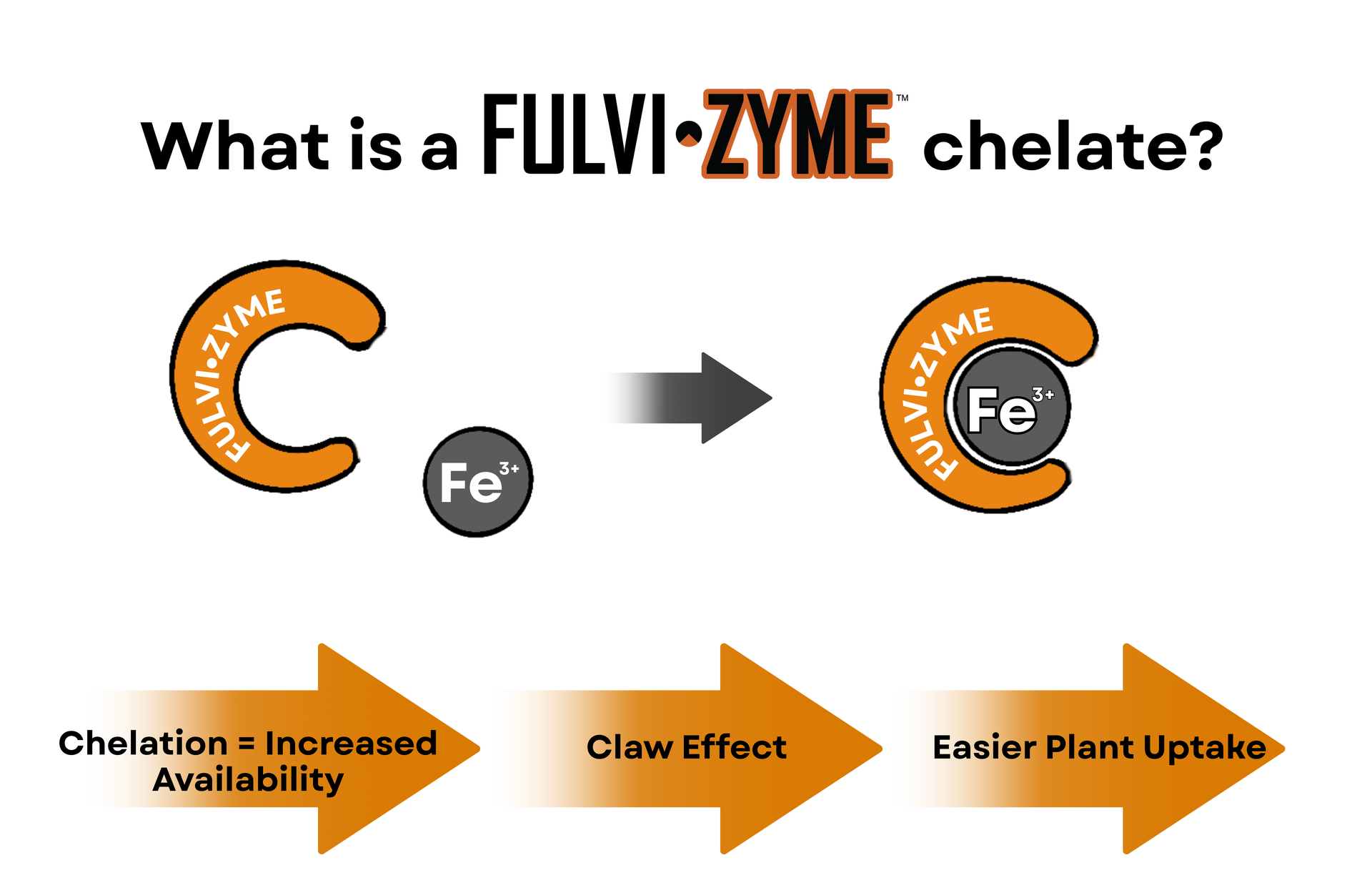
What is FulviZyme?
FulviZyme is a chelate that has natural “grab points” that hold on to nutrient ions. Think of it as a C-shaped claw that scoops up a nutrient and keeps it from getting locked up in the soil.
How it works:
- Grab
FulviZyme latches on to a nutrient; this “chelation” keeps the nutrient from tying up in the soil so it stays available.
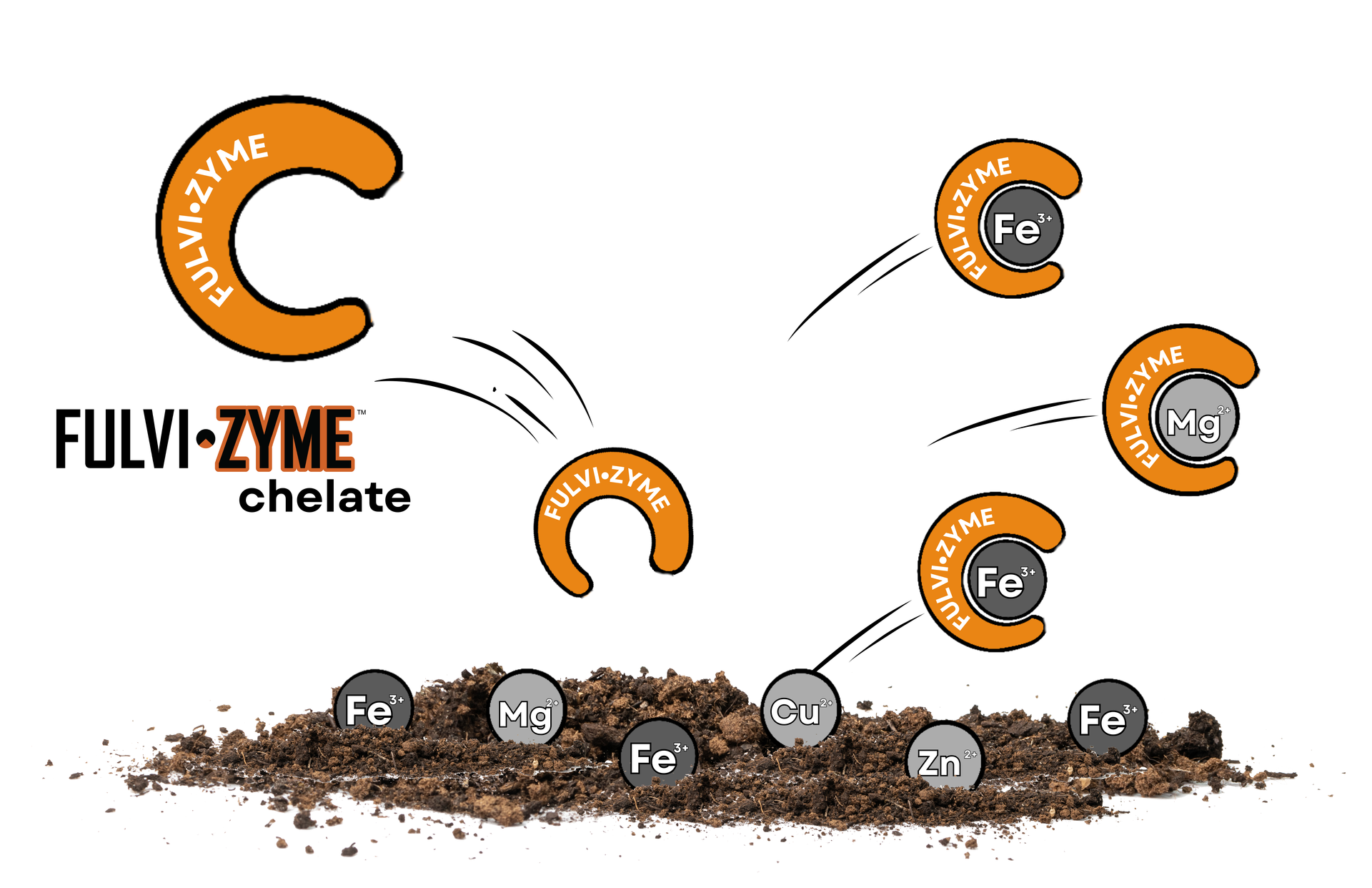
- Carry
Once attached, the nutrient is more mobile in the soil solution. That means it can move toward the plant instead of getting trapped.
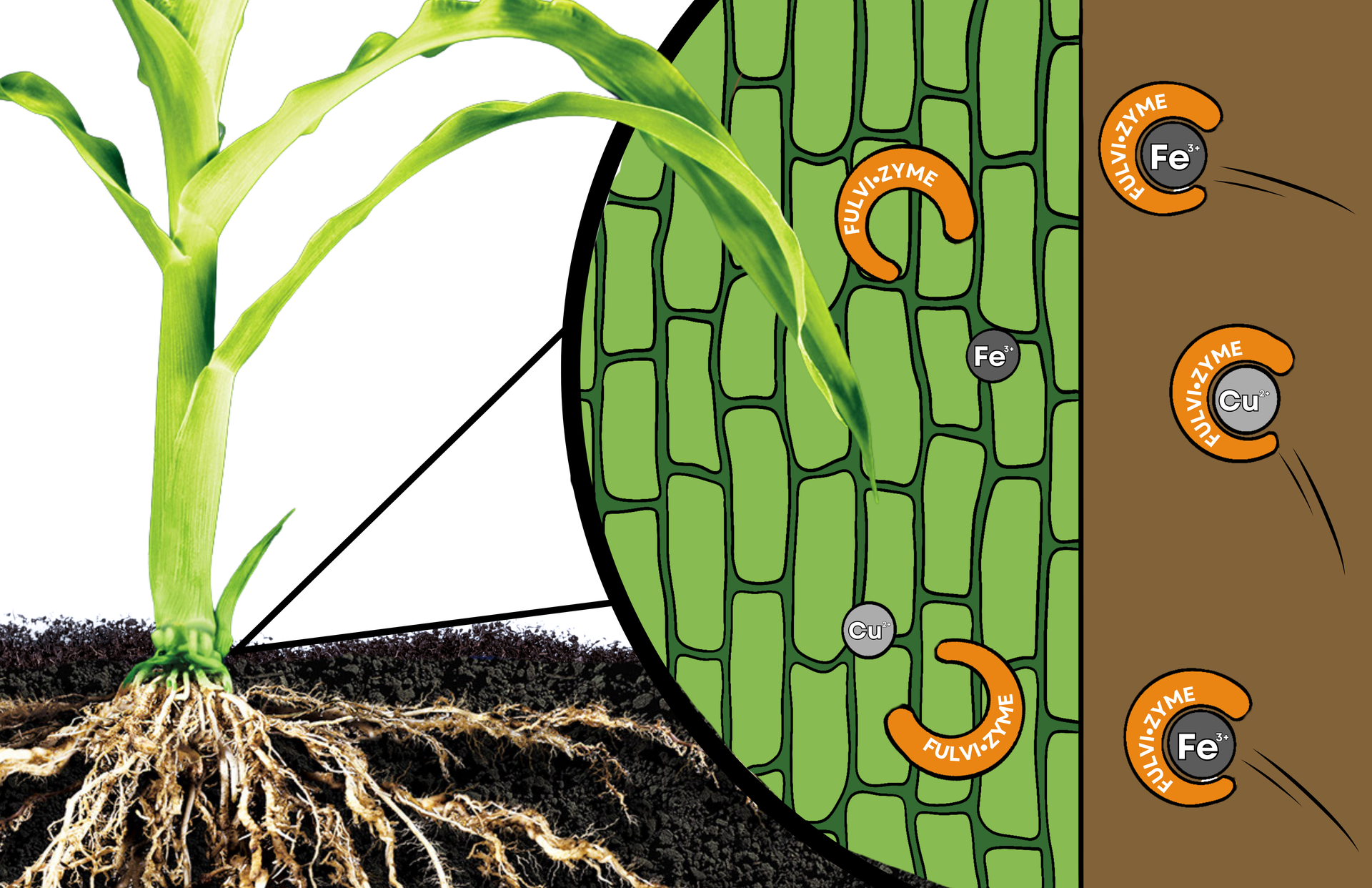
- Deliver
At the root surface, the plant can pull the nutrient in more easily. FulviZyme helps at the doorway by supporting the natural pumps and channels the root uses to bring nutrients inside.
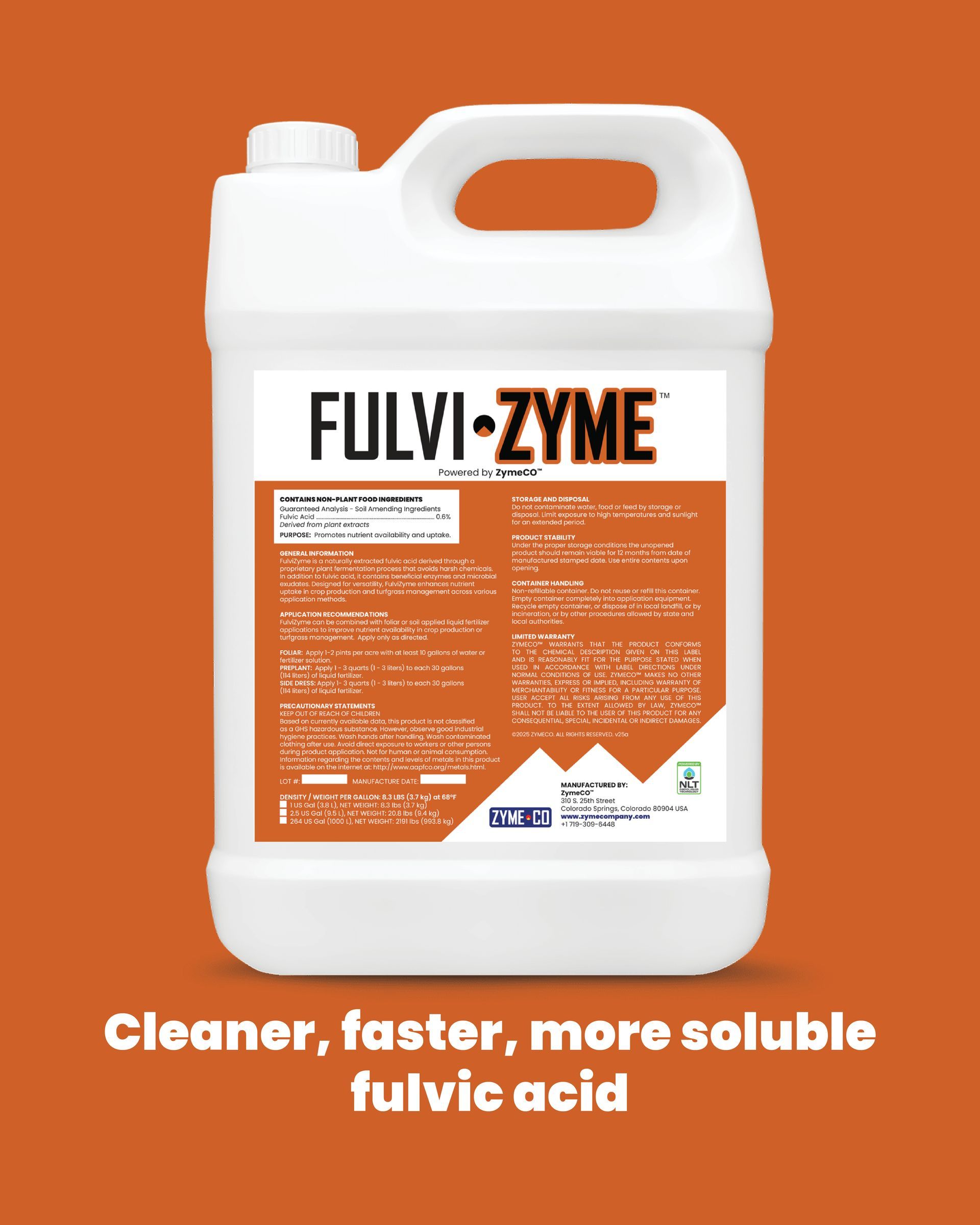
Grower Benefits of using FulviZyme
- More of what you paid for gets used
Better availability means higher nutrient use efficiency, especially in challenging pH or high-calcium soils. - Stronger start and steady growth
When micronutrients reach the plant on time, photosynthesis, enzyme activity, and overall vigor improve. - Plays well with others
FulviZyme supports beneficial microbes and root hairs, which further improve nutrient capture. - Do more with less
When plants absorb and use nutrients efficiently, you can often reach goals with smarter programs.
Where FulviZyme shines
- Alkaline or calcareous soils where iron and zinc like to lock up
- Sandy soils where nutrients can leach away
- Cool, wet starts when roots are slow and nutrients stall
- Tissue test programs that call out recurring micronutrient shortages
What you will see in the field
- Healthier color and quicker recovery from stress
- More uniform growth across variable soil pockets
- Better response from the nutrients you are already applying
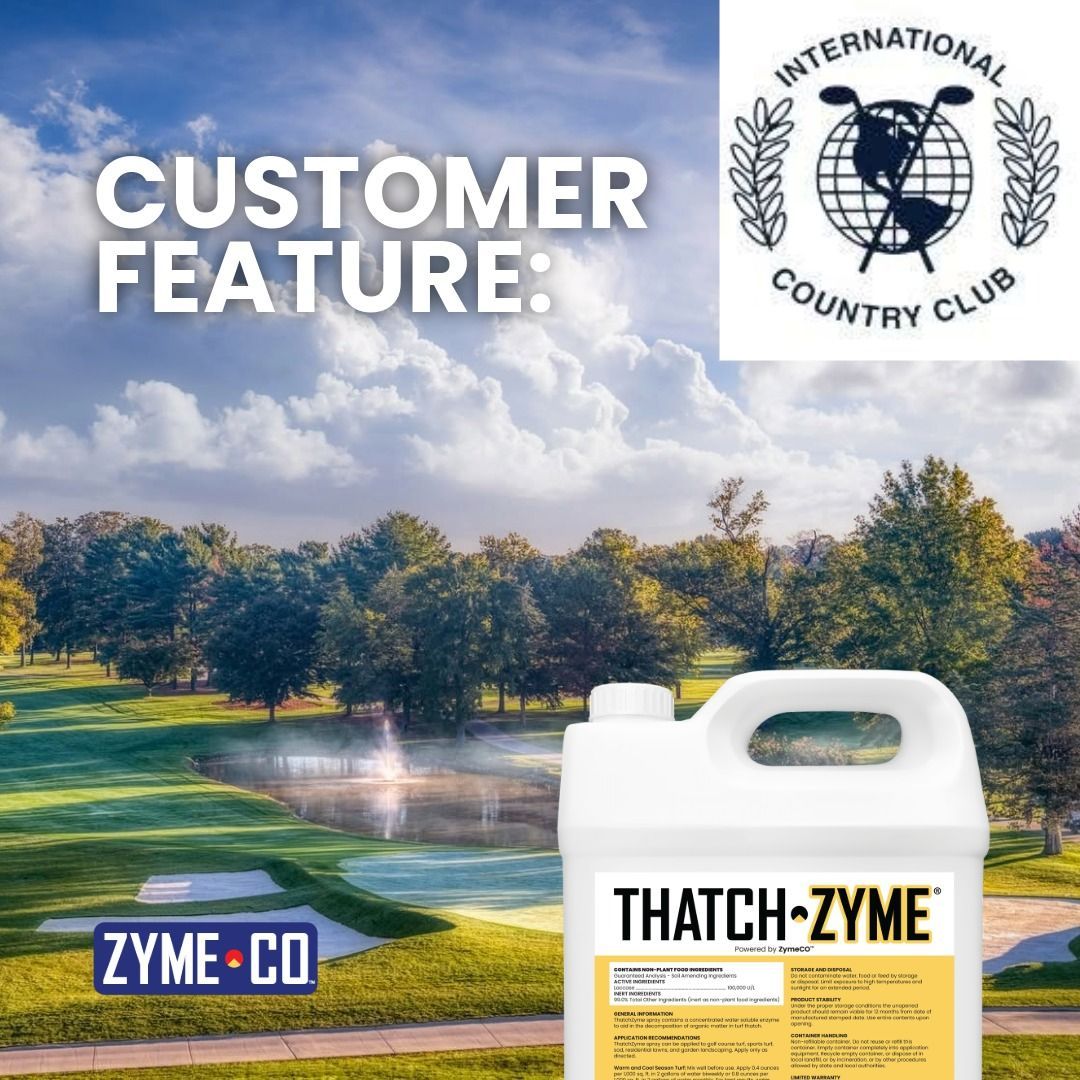
After years of battling puffy tees and summer scalping, International Country Club in Fairfax, VA, says "Our tees did not scalp in July and August as in years past. The puffiness is noticeably less."
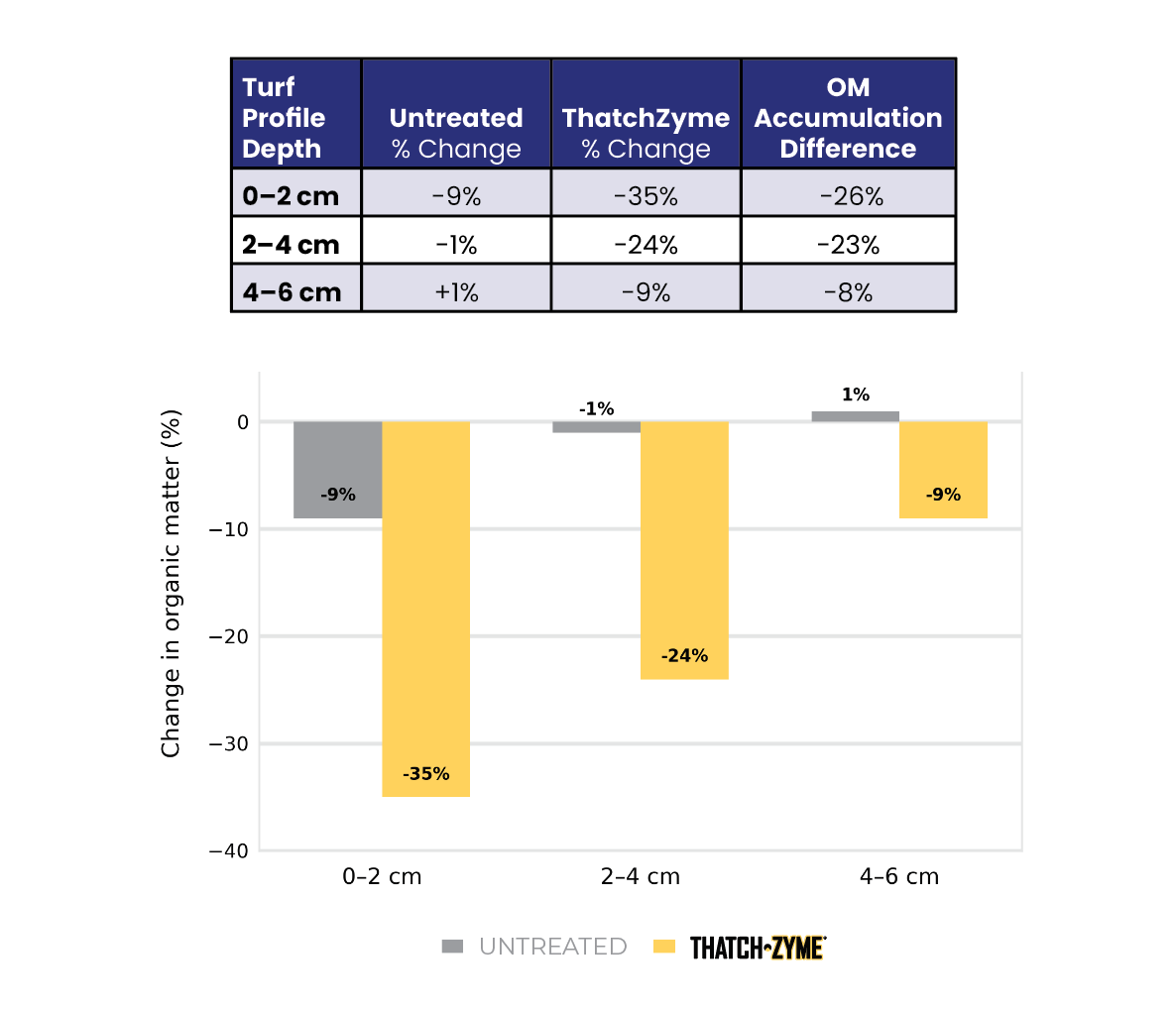
A 2026 Colorado golf course trial evaluated ThatchZyme’s effect on organic matter in a Poa-bentgrass tee. ThatchZyme reduced organic matter throughout the upper 6 cm of the turf profile, with the greatest reduction near the surface.

Jason, Bridgette, and Stephanie Wedryk dig into how residue breakdown products work, why enzymes are different from microbial products, and what farmers should actually expect from these inputs.
Biological products rely on living microbes that must survive changing field conditions or on blends of naturally occurring compounds with multiple modes of action. ZymeCO enzymes are different. They are non-living, purified proteins designed to catalyze specific biochemical reactions.
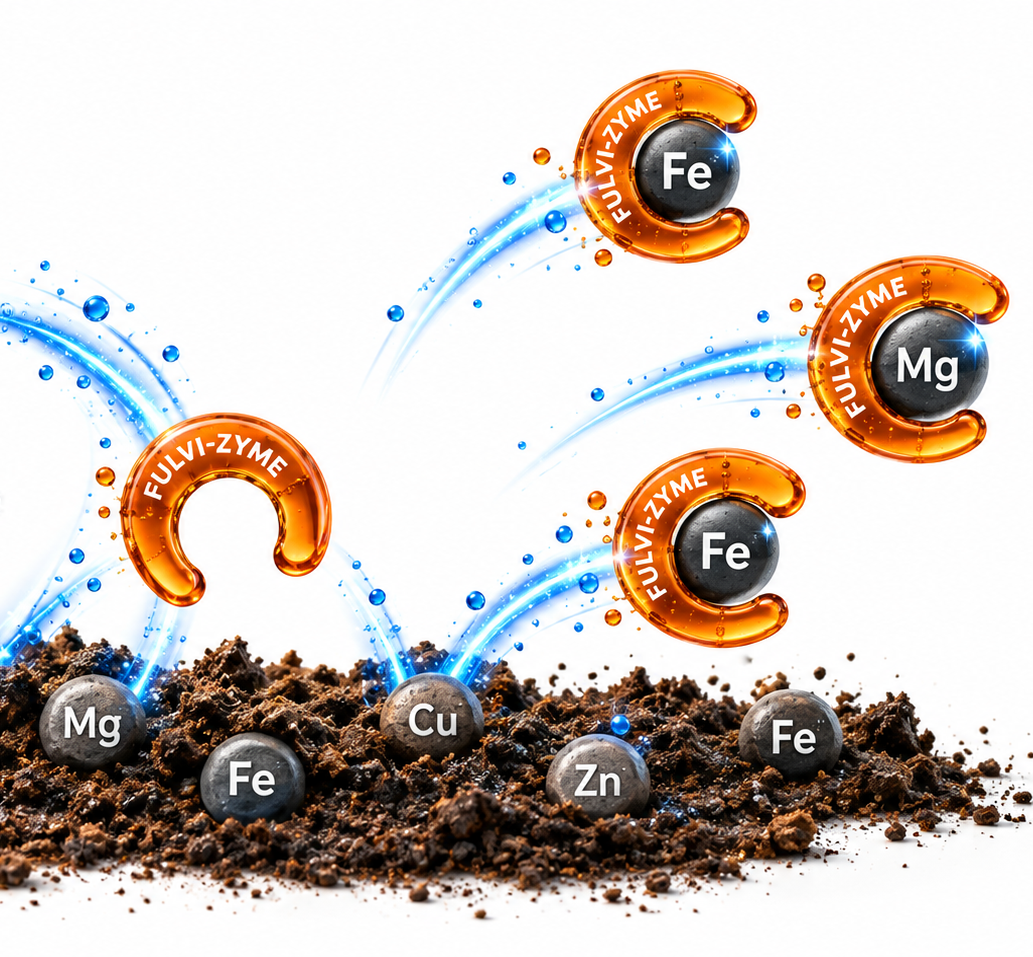
Unlike conventional leonardite-based fulvic products, FulviZyme combines plant-derived fulvic acid with naturally occurring organic acids and bioactive plant compounds.
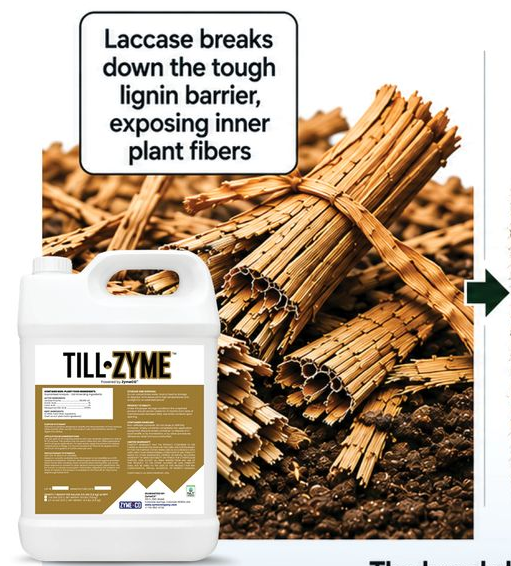
Effective residue management does more than reduce excess residue on surface. It helps turn this year’s residue into healthier soil and a more uniform start for next year’s crop.
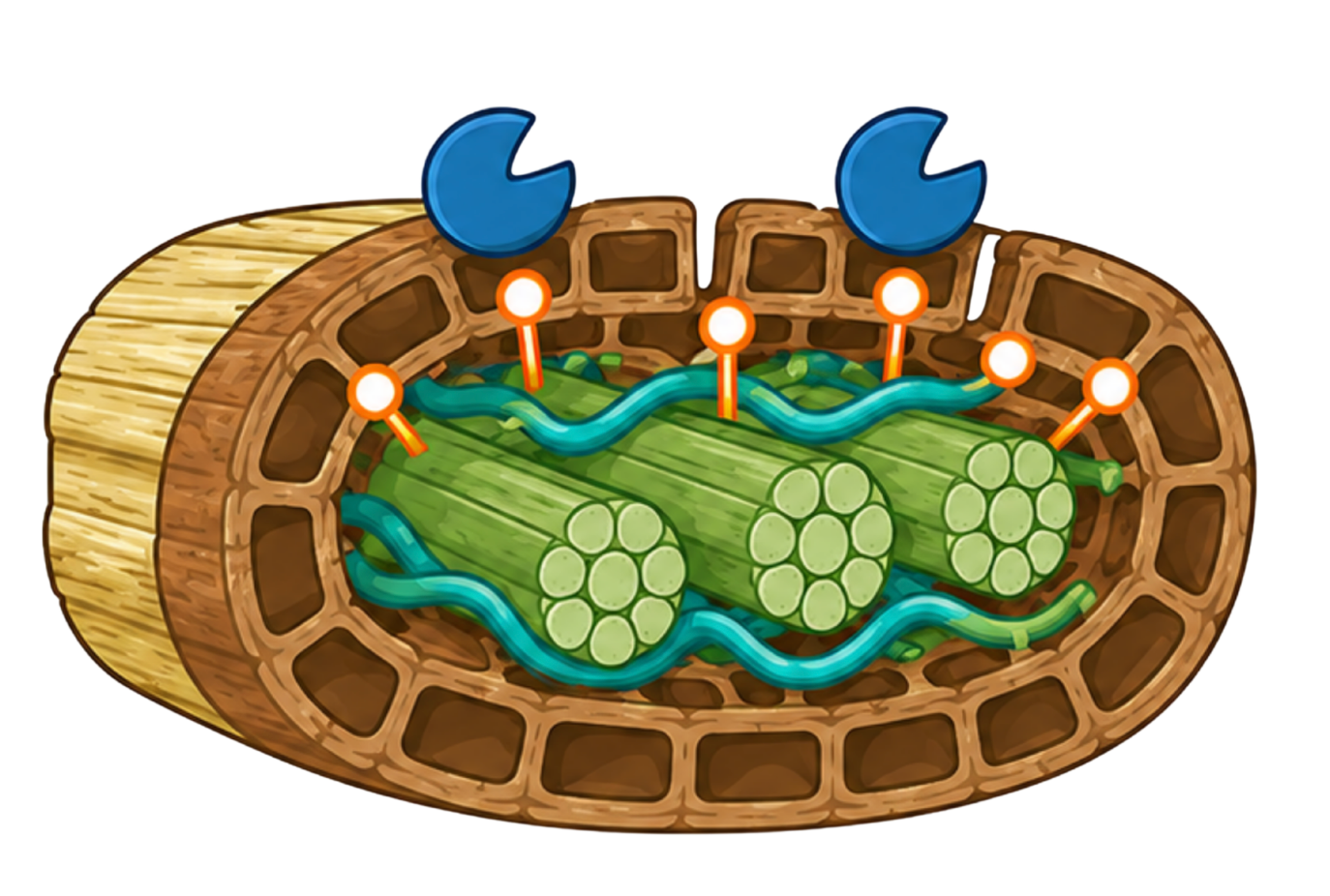
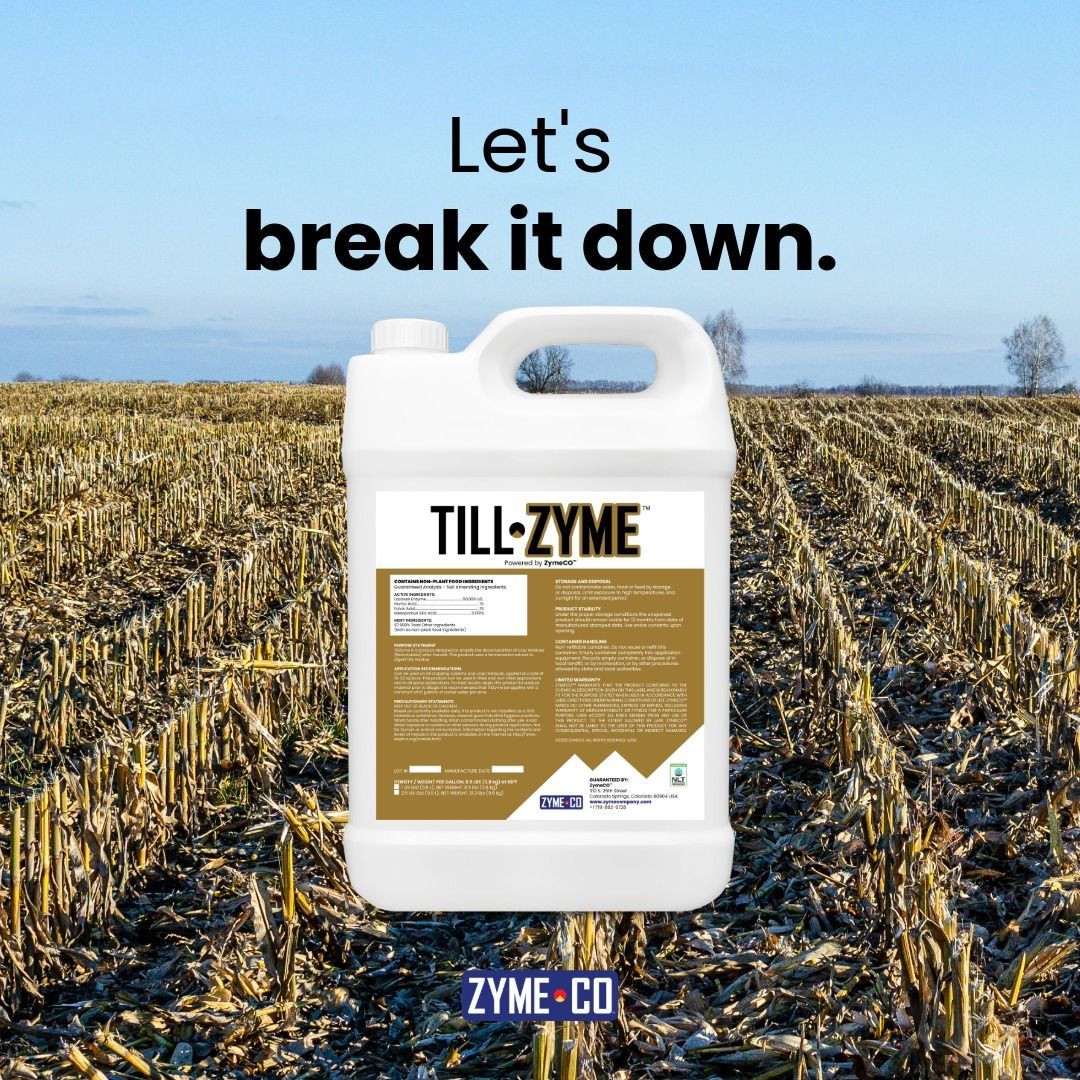
Rather than viewing residue as something to simply manage, TillZyme helps unlock its value by helping start the biological process that turns tough plant material into a resource for the soil.
Corn residue can decompose slowly because lignin gives stalks and leaves their rigid structure. TillZyme™ uses laccase enzyme technology to help accelerate the breakdown of tough crop residue.
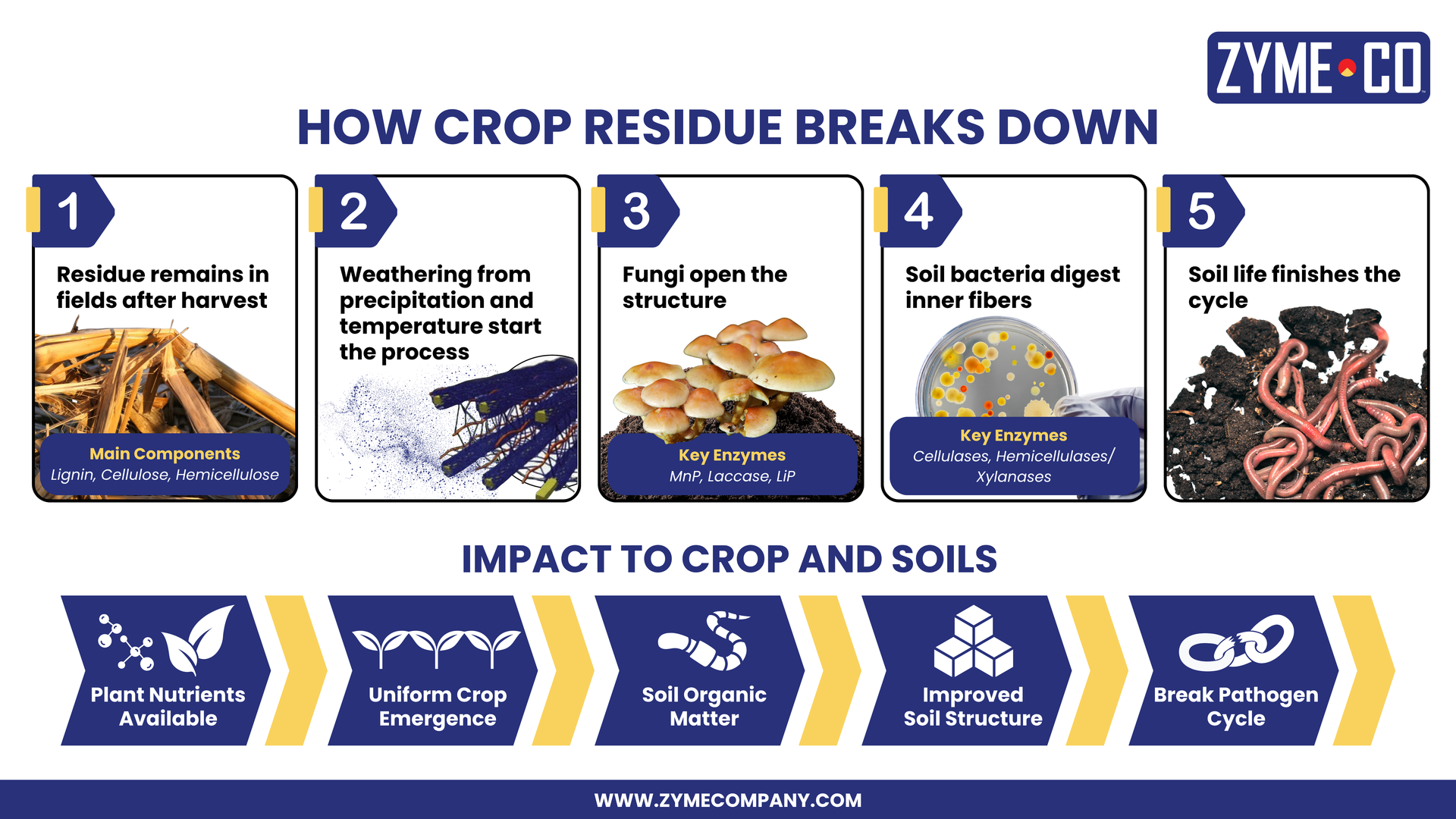
After harvest, crop residue is not just leftover stalks and leaves. It is an active biological system that adds nutrients to the soil, increases organic matter, and builds better soil structure for next year. Actively managed residues help create a favorable seedbed for better stands and yield. The enzymes produced by fungi accelerate the process by breaking down tough lignin before naturally occurring soil microbes take over. Learn more here .

Let’s dive into the science of thatch biology and learn all about a unique new product called ThatchZyme which delivers the first sprayable active enzyme proven to manage turfgrass thatch.