
Jarrett Kramer, Superintendent of Congressional Country Club, speaks about his success with using ThatchZyme
Phil Dwyer, VP Sales & Marketing • June 3, 2025

Jarrett Kramer, Blue Course Superintendent (formerly Gold Course Super.) at the prestigious Congressional Country Club located in Bethesda, MD has firsthand experience with ThatchZyme trials. His insights highlight practical, results-driven use of the product in real-world conditions.


How did you first trial ThatchZyme?

“Our first trial was like any other trial, unsure of what to expect. We applied it to tee boxes on two holes that sit right next to each other, that way we had the same environment for the trial and the control. We have been working on reducing organic matter in our tee boxes as much has built up over the years. We did the trial starting in early spring of 2023 and continued it through the summer. Our goal was to reduce organic content in the profile.”


How did you measure thatch/OM changes, were there any other related turfgrass responses observed? 

“We measured the organic content through the OM 246 testing method. That way we had hard data that would confirm or deny our observations. We also would take photos of the profile every two weeks side by side of each hole to confirm. We did observe more uniformity when the tees would dry down throughout the season. We would see inconsistent patterns before using the product. We also felt the tees we used the product on held up better to foot traffic.”


Overall, how did the product perform per your goals/expectations? 

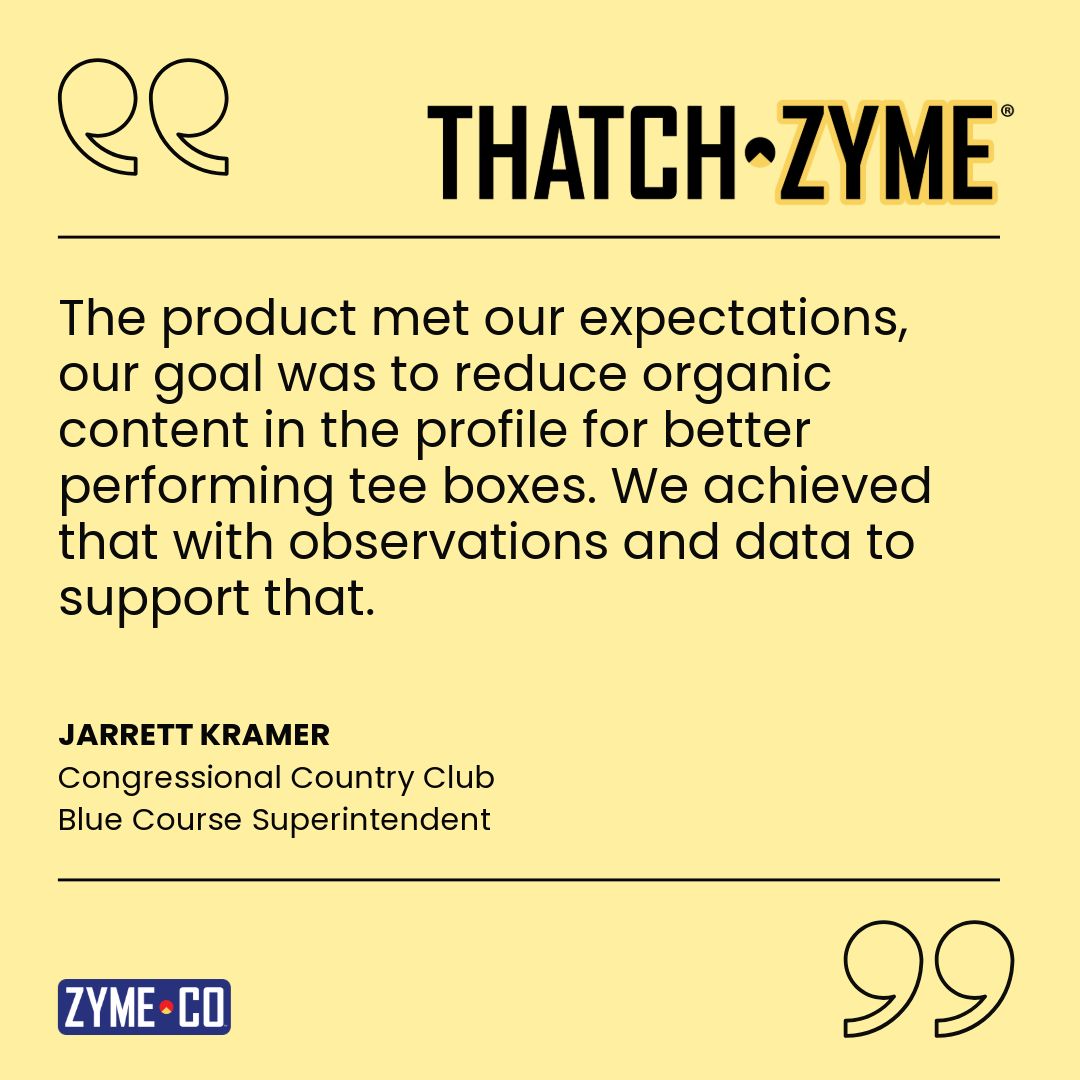
“The product met our expectations, our goal was to reduce organic content in the profile for better performing tee boxes. We achieved that with observations and data to support that.”


What other insights or recommendations would you share with fellow turfgrass managers considering using ThatchZyme? 

“Just try the product, there will be no negative result from utilizing this tool. Set a reasonable objective to maintain in managing your organic matter and what you desire. At the end of the day it is what you desire as the Superintendent, this will supplement your practices in achieving your objective when higher organic levels are present. You will have healthier and stronger playing surfaces.”


The results of the Congressional Country Club trial information can be
viewed on pages 6-10 here.


For more information on ThatchZyme, visit:
www.zymecompany.com/thatchzyme.com
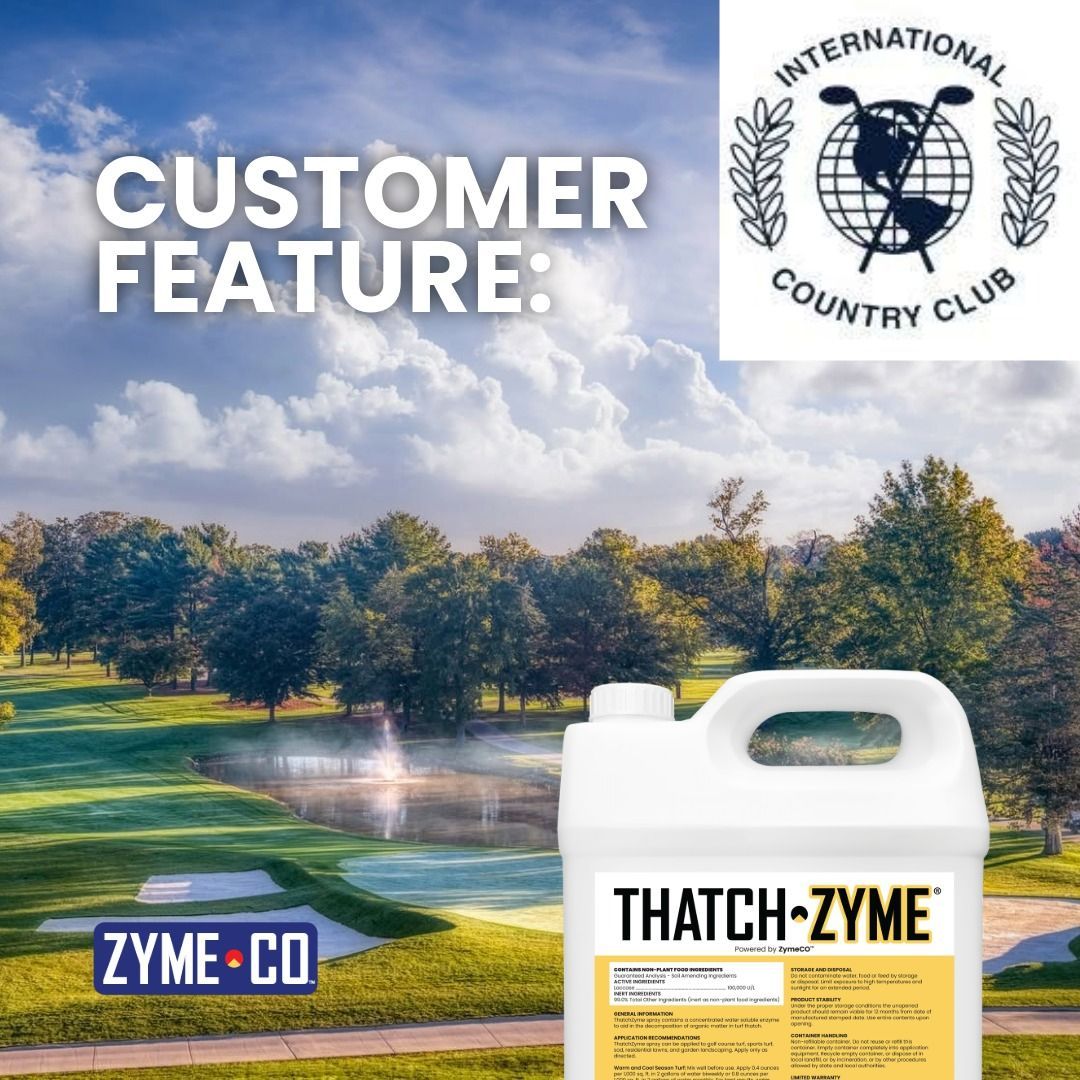
Customer Feature: ThatchZyme at International Country Club, VA
By Phil Dwyer • November 9, 2026
After years of battling puffy tees and summer scalping, International Country Club in Fairfax, VA, says "Our tees did not scalp in July and August as in years past. The puffiness is noticeably less."
Colorado Course ThatchZyme Trial:  Poa-Bentgrass Tee
By ZymeCO • November 3, 2026
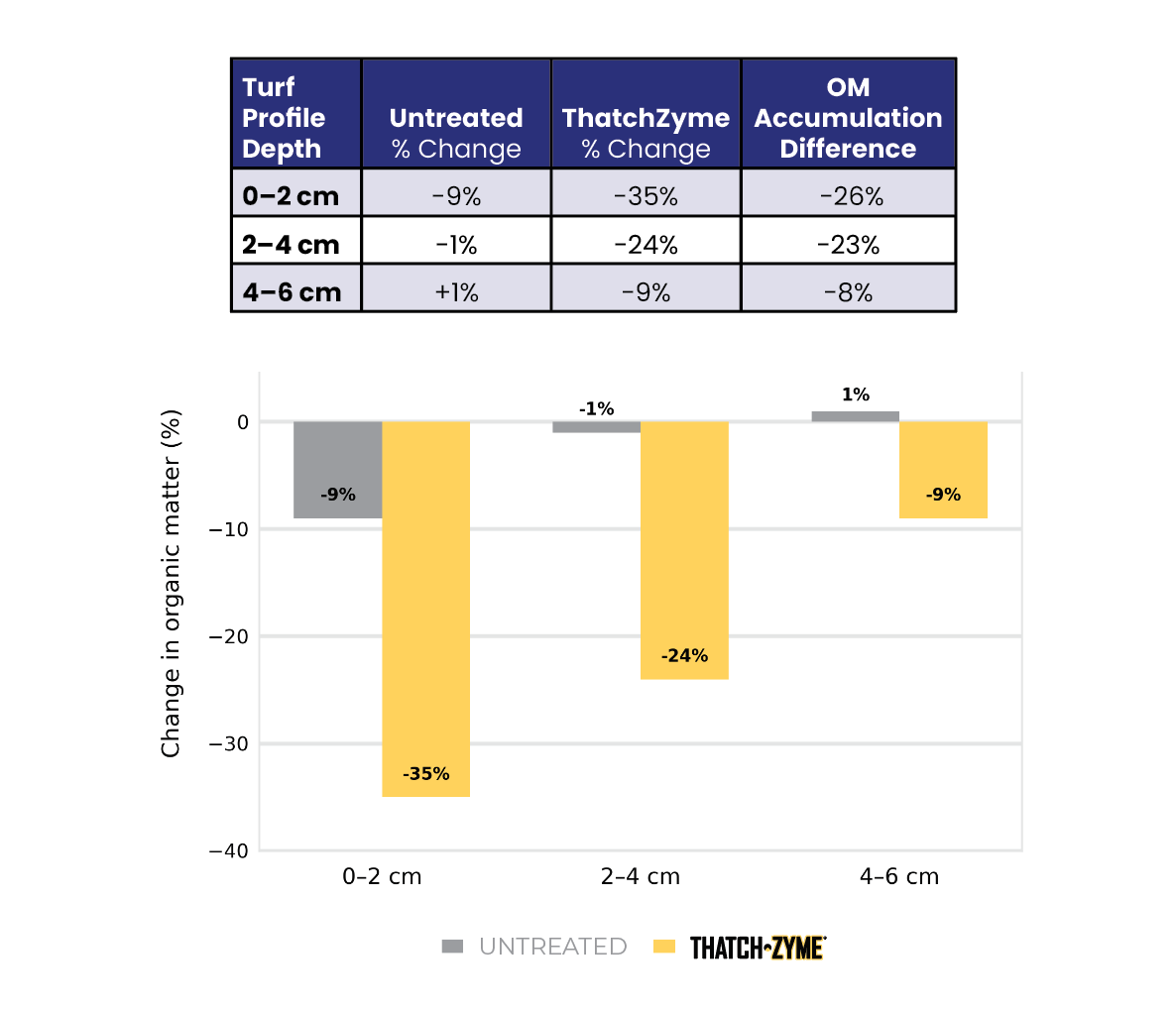
A 2026 Colorado golf course trial evaluated ThatchZyme’s effect on organic matter in a Poa-bentgrass tee. ThatchZyme reduced organic matter throughout the upper 6 cm of the turf profile, with the greatest reduction near the surface.
By Bridgette Readel& Jason Hanson, Agronomists Happy Hour • November 2, 2026
Jason, Bridgette, and Stephanie Wedryk dig into how residue breakdown products work, why enzymes are different from microbial products, and what farmers should actually expect from these inputs.
By Stephanie Wedryk, Ph.D. • October 21, 2026
Biological products rely on living microbes that must survive changing field conditions or on blends of naturally occurring compounds with multiple modes of action. ZymeCO enzymes are different. They are non-living, purified proteins designed to catalyze specific biochemical reactions.
By Stephanie Wedryk, Ph.D. • October 1, 2026
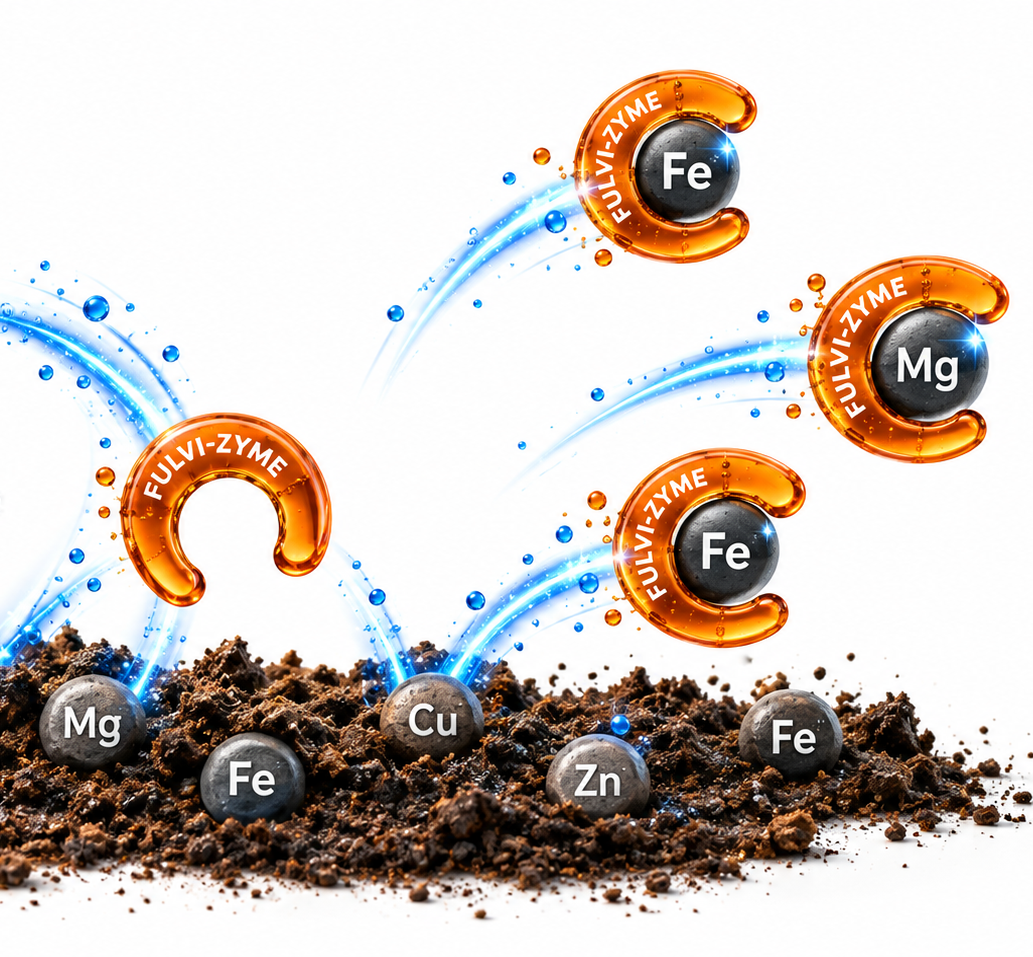
Unlike conventional leonardite-based fulvic products, FulviZyme combines plant-derived fulvic acid with naturally occurring organic acids and bioactive plant compounds.
By Stephanie Wedryk, Ph.D. • September 30, 2026
Effective residue management does more than reduce excess residue on surface. It helps turn this year’s residue into healthier soil and a more uniform start for next year’s crop.
By Stephanie Wedryk, Ph.D. • September 14, 2026
Rather than viewing residue as something to simply manage, TillZyme helps unlock its value by helping start the biological process that turns tough plant material into a resource for the soil.
By Stephanie Wedryk, Ph.D. • September 8, 2026
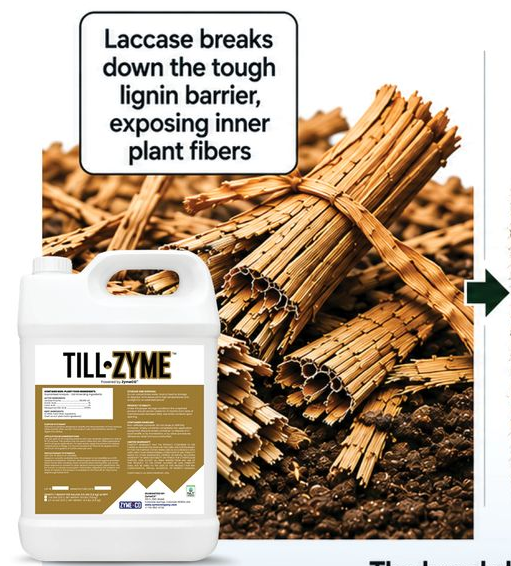
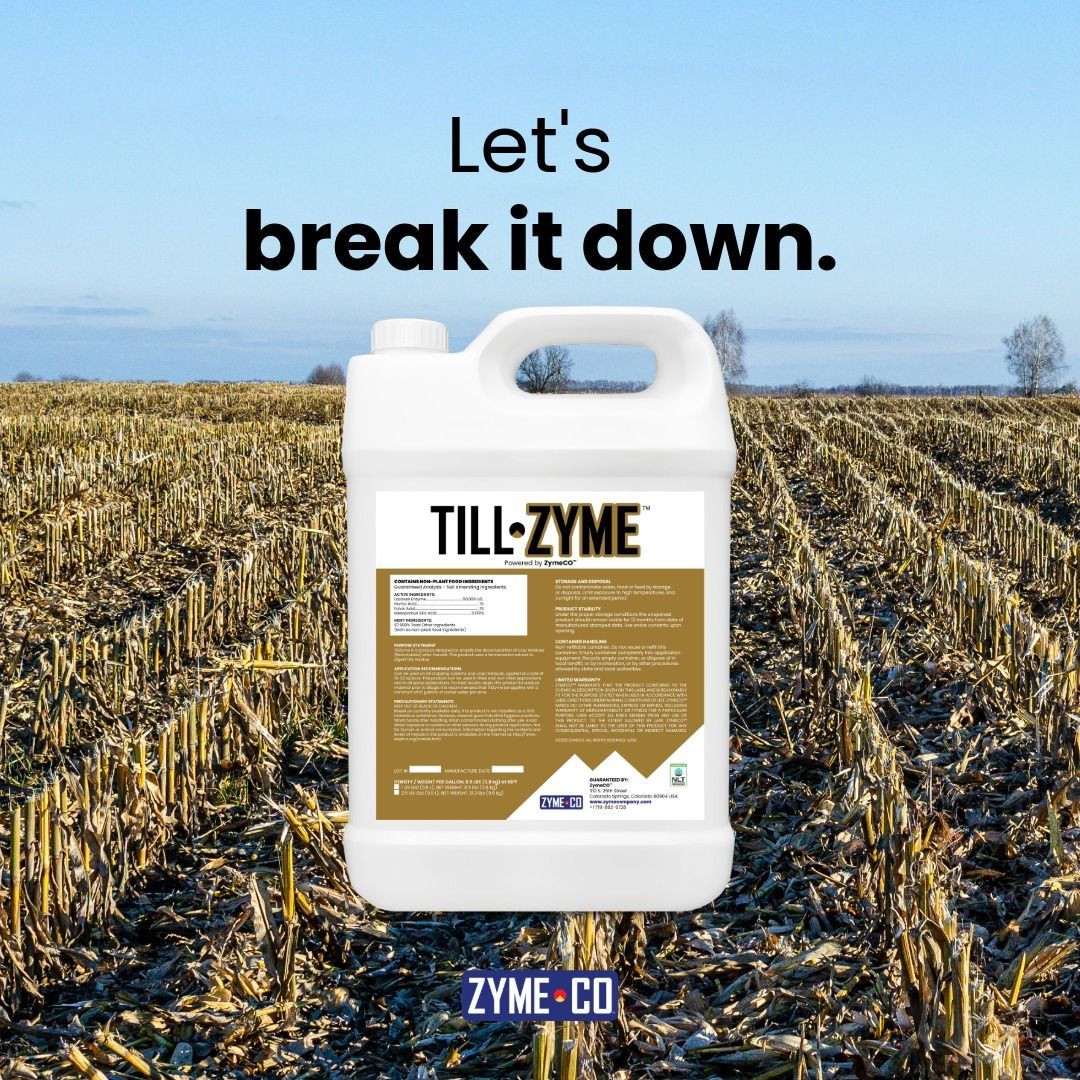
Corn residue can decompose slowly because lignin gives stalks and leaves their rigid structure. TillZyme™ uses laccase enzyme technology to help accelerate the breakdown of tough crop residue.
By Stephanie Wedryk, Ph.D. • September 2, 2026
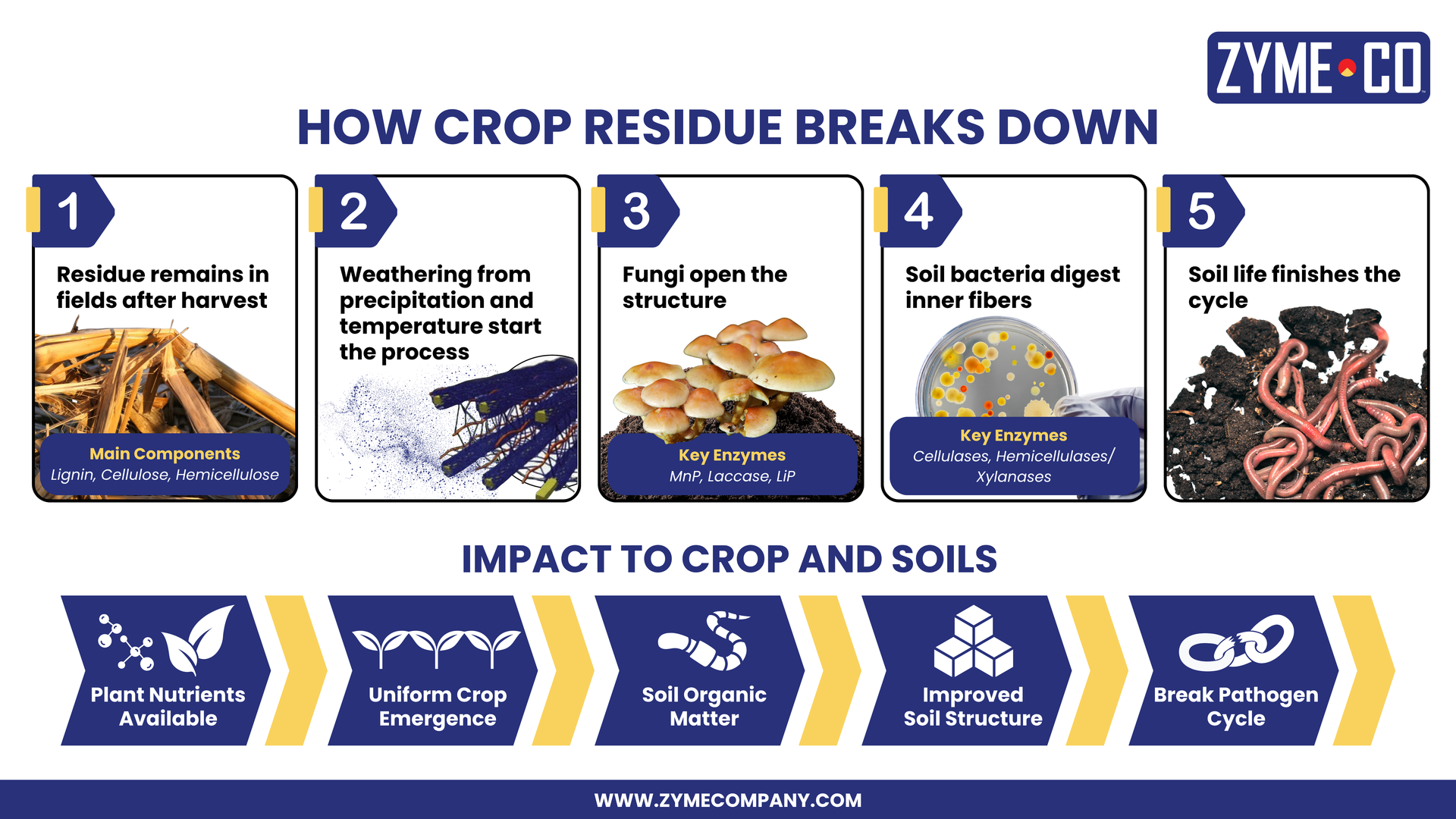
After harvest, crop residue is not just leftover stalks and leaves. It is an active biological system that adds nutrients to the soil, increases organic matter, and builds better soil structure for next year. Actively managed residues help create a favorable seedbed for better stands and yield. The enzymes produced by fungi accelerate the process by breaking down tough lignin before naturally occurring soil microbes take over. Learn more here .
By Phil Dwyer, VP Sales & Marketing • August 26, 2026
Let’s dive into the science of thatch biology and learn all about a unique new product called ThatchZyme which delivers the first sprayable active enzyme proven to manage turfgrass thatch.